
Establish what each system owns
Identify the authoritative source for each field or record, how matching records are recognised, and which changes should move in each direction. Agree what happens when systems disagree.
We connect applications so information can move between them with defined ownership, validation and recovery. An integration includes the handling of failed or incomplete exchanges.
Explore the scope
Repeated entry is often a symptom of systems that do not share the right information. An integration can keep records aligned, make a business event available to another application or prepare a controlled exchange between teams.
Connecting applications means deciding which records match, which changes are allowed and how to confirm delivery. Compare manual handovers with a defined exchange.
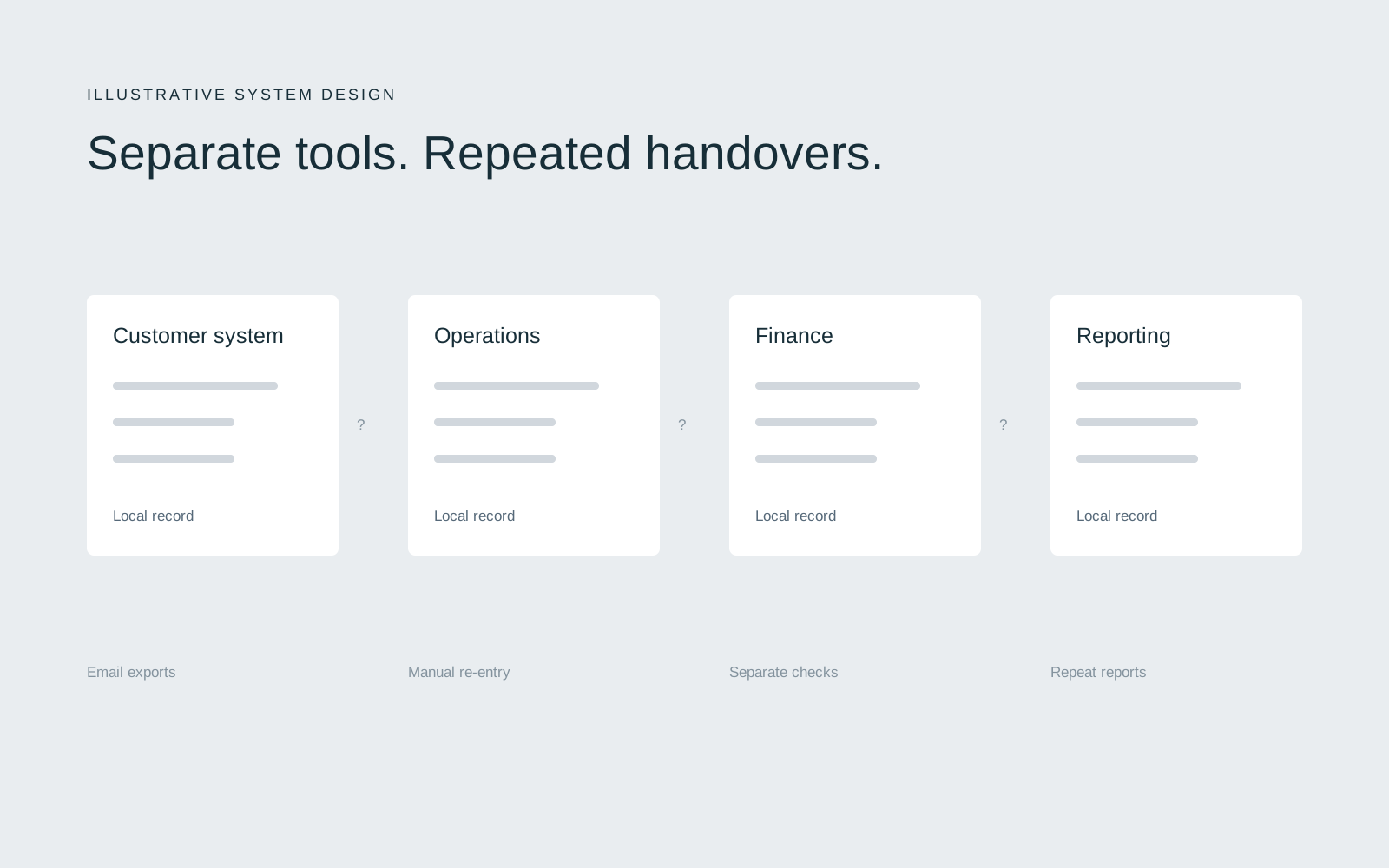
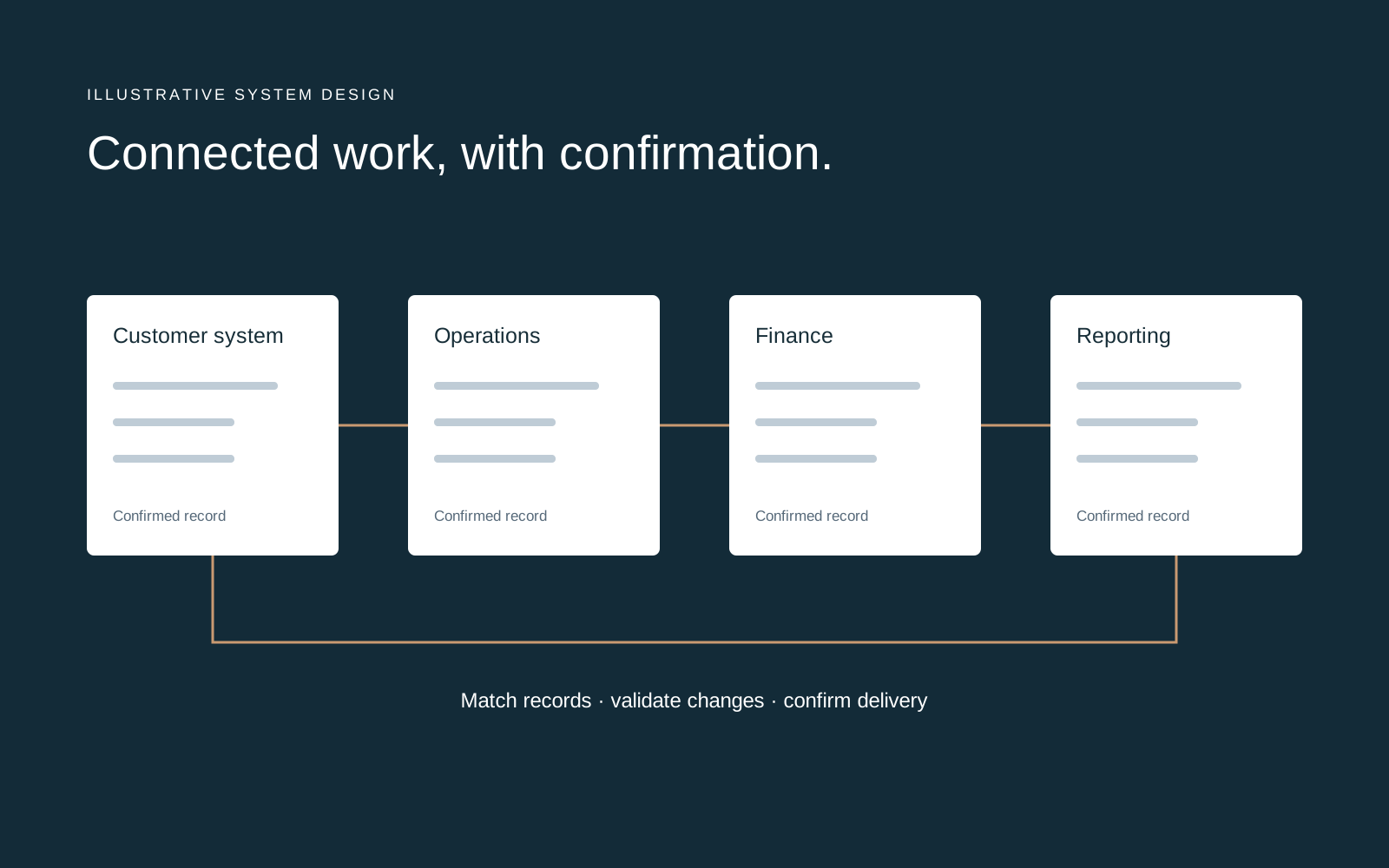
Identify the authoritative source for each field or record, how matching records are recognised, and which changes should move in each direction. Agree what happens when systems disagree.
Review APIs, event notifications, scheduled exports or files. Access permissions, subscription levels and the source system’s capabilities determine the feasible connection.
Map fields and identifiers, validate incoming information and handle repeat delivery or temporary failure. Longer exchanges may need recorded progress, completion status and a route to inspect unresolved work.
Review ordinary transfers alongside missing fields, conflicting updates, unavailable services and interrupted processing. Confirm who can investigate and correct each type of exception.
Review the agreed records and events in both systems. Confirm that the right information arrives, that repeat delivery does not create an unintended repeat action, and that failures leave an inspectable state with a defined recovery route.
Review and acceptanceThe integration depends on the interfaces and permissions available. Changes to a provider’s API, access conditions or data structure may require maintenance. The scope distinguishes integration defects from errors in the source information.
Tell us what you want to achieve and what is getting in the way. We’ll review the next steps with you.